Showing posts with label Chickens. Show all posts

Sunday, April 14, 2013

Guest Blog: A Tiny, Peeping Spring Chick -- Just What the Doctor Ordered

This week we've got something special for you all: A guest piece written by April Johnson Stearns (my big sis)! April and her blogs I [Heart] My Life and Green Tea and Chocolate have gained a avid following online and have been featured numerous times in her area's newspaper.

A year ago April was diagnosed with stage 3 breast cancer. Here she relates how for her and her family bringing three baby chicks into their home in the midst of the cancer turned out to be a wonderful decision.

I hope you enjoy this piece and take a moment to check out her blogs!
KJ
-----------------------------------------------------------------------------------------------------------
A Tiny, Peeping Spring Chick -- Just What the Doctor Ordered

If I said a chicken once saved the lives of my family, I wouldn't be telling you the whole truth.
 
Sweet Cecily
 
It was actually three tiny chicks.

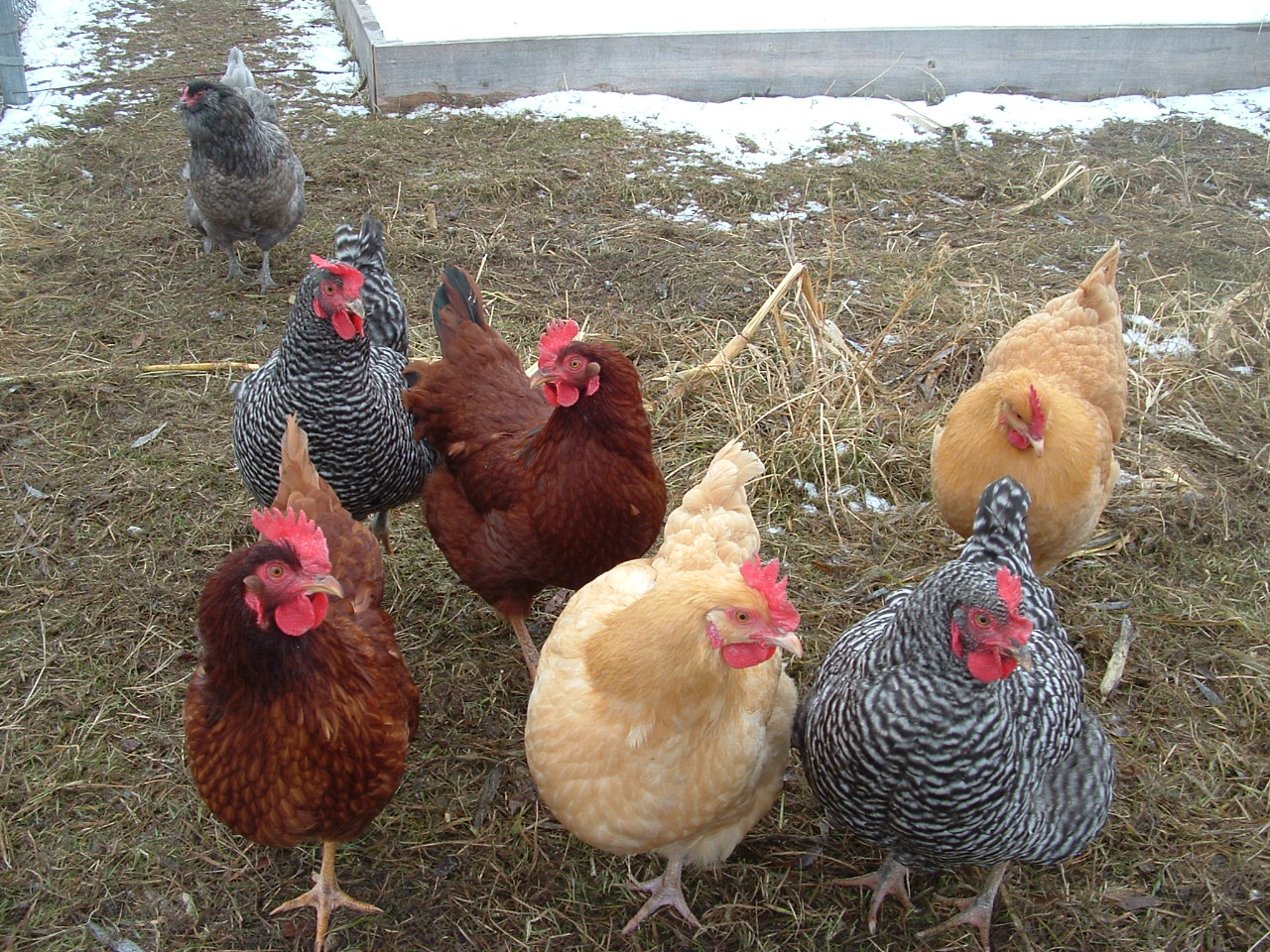
A black and white Barred Rock, a so-black-she's-green Australorp, and quirky, beardless Americana.

To us, they are Kiki, Poppy, and Sweet Cecily. And they rule the backyard.

A year ago, getting backyard chickens for our urban home (not homestead mind you, just a simple home) was a dream I looked forward to. The idea had popped into my head the previous year, and had refused to budge (they say, once your mind has been expanded by an idea, it will never shrink back – doh!). At night, I lay in bed trying to picture chickens in our very urban backyard. We couldn't have many pets in our tiny postage stamp lot, but a few chickens, I was thinking, we could manage. Pets, eggs – win/win. The pet that makes you breakfast!

I'd received a few chicken books as Christmas presents that year and as I read through the winter I was simultaneously prepping my then-3-year-old on chicken farming dos and don'ts.

But then, right before spring, everything changed. I was diagnosed with aggressive, stage 3 breast cancer. I found the lump myself one evening and when I asked my husband to feel it, he immediately said, “What the hell is that?!” It was enormous and had seemingly come out of nowhere.

With the arrival of this malignant lump, everything changed. Chemo, surgery, radiation... I was diagnosed on March 12th – when I asked my brand new oncologist how long treatment would take he said nonchalantly, “I think we can have this wrapped up by New Year's.” New Year's?! It was only March!

Suddenly I felt like I could literally hear my dreams and this little life I'd created with my family crashing down all around me like sheets of glass crashing on the floor. In the days following my diagnosis, I was haunted. Late into the night, I'd sit in bed, staring at the moon-lit oak tree in the backyard, listening to the twin sounds of my husband and child breathing in their sleep. And I would cry. I cried for me and I cried for them.

Two weeks after my diagnosis, I started chemotherapy. Chemo bridged the span from winter to summer: 5 months of intravenous treatments. My hair fell out, I was tired, and sometimes nauseous, though thankfully I was never throwing up. Mostly I was tired. I took to napping daily.

Life in our house began to revolve around treatments – receiving them & recovering from them –  and doctor appointments. This is hard enough for grown-ups. Unbearable for children.

Something needed to shift our focus.

At this time, we received such an outpouring of support from friends & family, and even strangers. Everyone wanted to know how they could help. My husband's aunt was aware of my pre-cancer dream to have a little flock of hens. Being a carpenter, she set to work creating a lovely, little hen house for us, made almost entirely from salvaged materials.

While she built the hen house, we debated whether it was a good idea to get chicks this year. Was it too much to add on a new venture on top of chemo? With my weakened immune system, was it safe for me to be around the chicks? Was another new thing really what our daughter needed?

One June morning, mid-way through my course of chemotherapy, we decided to take the plunge.

I'd done a little research on the more gentle chicken varieties and which ones tended to get along with each other. I decided on the Barred Rock, Americana, and Austrolorp. Of course they were not all to be had from the same feed store. That would be too easy, right? So on brilliantly sunny morning, my daughter and I drove 30 minutes into the mountains to acquire our first-ever chicken. In her car seat, my daughter held the little white box with the air holes. Inside, the 4 day-old chick peeped and peeped. Within five minutes, she was named Sweet Cecily. (All our chickens ended up being named from favorite fictional characters.)

We took Sweet Cecily directly to the second feed store, this one closer to our house, and bought fuzzy Poppy and tiny Kiki. And then we took our little flock home to a cardboard box with a heat lamp in the garage. There they lived for 8 weeks.

It became our habit to spend lots of time in the stuffy garage, holding the chicks, laughing at their antics, watching them explore, snuggling them as they fell into sudden, exhausted baby sleep. I have many happy memories of that time of sitting in a folding chair with my daughter in my lap, with a chick in her lap.

During this time I continued my chemotherapy. Right about the time we got the chicks, my treatments changed and I went through 3 infusions that were much more difficult than the previous drugs. I was more tired, more nauseous. I felt myself becoming mentally adverse to the drugs – I was just ready to be done (to this day I cannot look at red Kool-Aid because the medicine was this very shade of red).

But adding the chicks to our daily mix was always a blessing and never a burden. In the realm of livestock, chickens require very little care – nothing you can't squeeze into 10 minutes a day (on chemo even!).

And that chemo? Well, it did the trick – I had my last treatment on Aug. 8 (the same week the chickens moved from their now-cramped infant cardboard box out to their big girl spacious, custom-built, fancy-schmancy hen house). At the end of chemo, the lump in my breast was no longer palpable. And when I had a radical modified mastectomy in September, the surgeon found no evidence of disease either in the breast tissue or my lymph nodes.

In retrospect, getting those little chicks was the best thing we could have done during my cancer treatment. Having a sick mother is always stressful for children, but having a sickness that goes on and on is something else entirely. The chicks became the perfect distraction. Something to keep the mood light & fun – something to look forward to every day... Those chicks have grown up being handled. My daughter carries them around them yard, balances them on her swing, sets them on balls. She hugs them tight. They were just what we needed.

And when we got our first eggs at Thanksgiving... well, we had a lot to be thankful for that year.


April Johnson Stearns is standing right behind you. A work-from-home mama, April lives in Santa Cruz, CA with her husband, daughter, black cat, gold fish, three chickens of various colors, and two in-laws. You can find all her musings about parenting, cancer, (parenting with cancer), nutrition, and everything in-between at her two blogs (cuz she's an overachiever like that) at I [Heart] My Life and Green Tea andChocolate.

Friday, March 15, 2013

Surviving the Molt

Chickens molt annually, which is to say they loose their old feathers and grow new. This coincides with the changing seasons and shortened daylight hours, and typically occurs in the fall or early winter. Actually, they molt a couple of times from hatching to becoming chickens, but the most noticeable molt for me hit our flock this fall when our hens were approximately 1.5 years of age.
It is at about that age that chickens experience their first mature molt and quit laying eggs. From our high of 27 dozen eggs last July, we dwindled down to just 7 dozen in the month of November.  Because growing feathers takes such a great amount of energy and protein, during the molt many chickens quit laying, or laying becomes very sporadic. To make matters worse, the long dark nights of winter also cause chickens to reduce egg laying, molting or not.
It also seems that this is about the time many chickens meet their end. At about 18 months old a young hen is fully grown, the meat is tender and not yet tough, and she is about to quit laying. It is at this point when you have to decide if you are going to keep feeding an animal that is not producing, or if you are going to butcher and  raise new chicks in the spring. From a livestock producer's view point the choice is clear, however from the backyard chicken keepers perspective the decision is a tough one. While we do intend to raise meat birds "someday" it was clear from early on, these birds were not going in the stew pot.
You might remember from earlier blog posts that I had hoped our chicken flock would be self supporting. They should "pay their way" I reasoned, and up until this point they had - more or less. We sell our eggs to friends and the proceeds buy the feed. By supplementing with kitchen scraps and plenty of yard foraging, we had managed to keep the monthly feed bill fairly low. Until the molt. This fall we struggled to meet our weekly egg orders, and finally in November just had to tell our customers that "the hens are taking some time off". There were times when I thought we were suckers for continuing to feed chickens that had no intent to lay. I worried if they'd ever lay again. I was nearly convinced that we were going to be stuck with hens that merely wandered around eating ever more expensive feed until they died of old age.
But at last it seems we've all survived the molt.

Last week for the first time in what seemed like forever, we collected 5 dozen eggs. Our daily production has been ramping up for a while now, but I have been skeptical until recently. Only now do I truly believe that we are through. Through the molt, through the winter and back in business.
Spring is a time of new life and new energy. For our hens it is also time for them to get back to work!
Silver Laced Wyandottes resting on the dog house.
For more information on the molt and how to get through it check out this article by:
KJ

Saturday, February 23, 2013

Chickens on a trellis

Springtime to do: build a stronger pea trellis!

KJ

Wednesday, February 13, 2013

Ever seen a chicken in a boat?

What good's a fishing boat in the winter?
The chickens sure like it!
KJ

Monday, September 10, 2012

Chicken Integration

If you recall from earlier posts like The halfway house aka chicken tractor and chick love, Whitney and I raised 5 more chickens this year. These Silver Laced Wyandottes came to us as day old chicks and we brooded them in the house until they were old enough to go outside. They lived in the chicken tractor for several weeks while becoming accustomed to the outside world. After they became comfortable, we began opening the door in the afternoons so that the pullets could roam the yard like the hens do. But even though they were all out together, the two groups would not mix. They were two groups tolerant of each other but not interested in meeting. Eventually the pullets became too big for the chicken tractor, so it was time to move them into the coop.
The Five Pullets
I guess I thought Whitney would just chicken whisper them right into the hen house, but it didn't exactly work that way. It turned out more like a game of Chase the Chicken every night for a week. The books all say that it is as simple as placing the pullets in the coop at night, and the next morning they will wake up knowing that's home. I'll tell you how it went for us: One night Whitney and I moved the pullets one at a time into the coop and placed them on the roost. The next morning, when I opened the door to the chicken yard, the pullets tumbled out and hid in the corner. The hens scratched and pecked like normal, but the pullets continued to huddle off on the side. That afternoon we opened the door to the big yard and the pullets ran back to the chicken tractor! We rounded them up and got them back in the coop, but they were clearly not happy about it. For about a week every time we opened the door, the pullets ran out to return to the their old home. It was sad, and we even worried that they might not be eating but after several rounds of chicken wrangling they did start returning to the coop at night. It's taken a while but I'm happy to say that the flock is now fully integrated. Sure the hens have a pecking order and the youngsters are not yet on the top roost, but they aren't a separate flock either.

The Integrated Flock
To top the news, this week Whitney found a couple mini eggs in the nesting boxes, suggesting our little Wyandottes have started laying! So, it's official we've got 19 layers and 1 rooster (although one of the Wyandottes is showing some rooster-like tendencies, more on that later).
Sometime soon we will try honey extracting for the first time, so stay tuned for that.
Until next time, as always, thanks for stopping by.
KJ

Monday, June 25, 2012

The Halfway House aka Chicken Tractor

This spring, Whitney and I built this simple Chicken Tractor from plans we found in Hobby Farms Magazine
We wanted somthing to act as a step between the brooder box and the coop. The reason being that introducing pullets to the coop too quickly can result in dead pullets if they are too young. The older hens will assert dominance and if the pullets can't take the punishment, the hens can kill them. So we checked around and found this one that seemed to fit the bill, especially since I didn't have to buy any extra materials. This mini coop will act as a Halfway House for this summer until the pullets are ready for life in the coop.
 It is a super simple design, although I changed it a little to use materials I had on hand. They used 2x2's for the frame, I used 2x4's. Their overall length was 10' mine is 8'. Also they didn't mention any roofing, I used tar paper and shingles I had on hand.

The pullets have half the area boxed in and half the area fenced in. This way they can regulate how much sun they get and have a place to hide when spooked. There is a fenced floor which allows for foraging, but keeps them safe from preditors.  

I didn't insulate or install anything perminant inside because for us it will only be a temporary pullet residence. Also, since the idea is to keep it light enough to move around, everything inside gets removed when it's time for a move.  
So here is the finished "tractor". The term comes from the use of chickens to cultivate and fertilize the ground below. That's not exactly our intent, but it is nice to let the chicks mow the grass. Since we've been using it, it seems a move once a week is about right to keep the grass green and the girls happy. It's not super easy to move, but do-able with the wheels on the left above.


At about two months, our pullets are fully feathered and seem to be very happy about being outside. They took to foraging with no trouble and are now enjoying a diet of pullet developer crumble plus plenty of grass and bugs.
KJ


Saturday, June 9, 2012

Celebrating the wild side of chickens

Our rooster Colonel Sanders is starting to show his heritage. More and more these days he is acting like a rooster, crowing and strutting constantly, "servicing" the hens every few minutes and at times pecking and flapping at our legs. His antics have cost him some friends, one of our neighbors even blogged about her bad encounter with the Colonel (when they visited our chicken coop while we were out of town). Whitney generally talks softly to him when he's like this and picks him up to calm him. Together they walk around the yard, while she talks softly and pretty soon his eyes are shut and she grins at me with the napping bird in her arms. My own reaction to his chicken dance is a little less compassionate: generally I tell him to buzz off and keep going about my business.
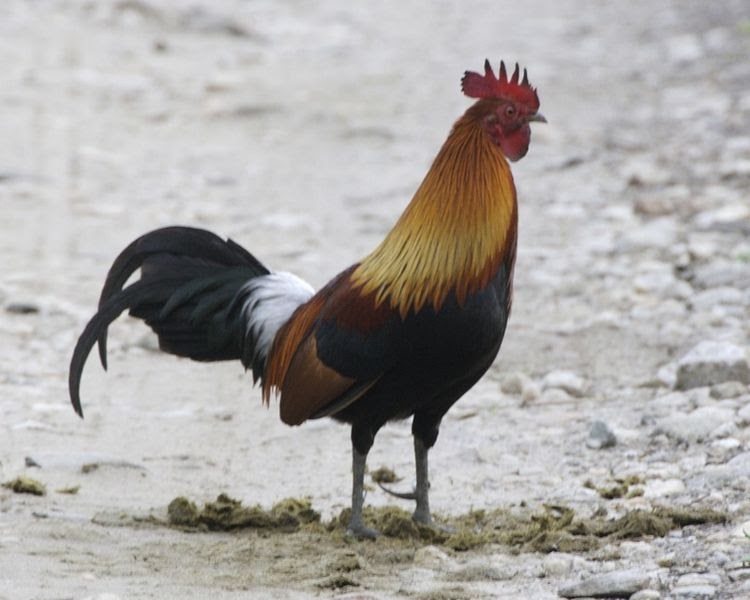
However, I recently read a really neat article in Smithsonian Magazine: How The Chicken Conquered the World which has me rethinking my attitude towards our Colonel. The chicken's lineage it turns out stretches back an estimated 10,000  years to the  Red Jungle Fowl (Gallus gallus) of Southeast Asia.

Red Jungle Fowl (Gallus gallus). Source:Wikipedia.com
In the wild, the rooster acts like many other male critters, defending his harem, fighting other males and declaring himself the baddest of the bad to all that can hear. One interesting point about the chicken is that the hormone that causes most creatures to only mate at a certain time of year seems to be suppressed. This means the hens can reproduce (lay eggs) year round as opposed to say turkey and geese which only mate in the spring. This also means that the lucky rooster has to mate his hens year round to keep them fertilized and thus build the flock. This is probably a key to why the chicken was domesticated long before other fowl, since their eggs were available all year long. The eggs it seems were utilized long before their meat, which didn't become popular until relatively recently.
Another item I found fascinating is that long ago Roman armies would travel with a rooster, or cock as they are historically known. The cock was observed before a battle, and only if he had a good appetite did the army go into battle believing a victory was likely.
The rooster's courage was so revered in fact, that where it is still practiced cock fighting is the oldest form of sport. While in the US it is considered inhumane and cruel, in many places cock fighting is a traditional sport, and the victorious rooster is celebrated.
Like I said, it's a neat article and worth the time to read, but enough about the ancient chicken. Today the chicken is prized for it's mild meat and it's ability to lay eggs consistantly. Also the chicken produces more meat per pound of feed than almost any other domestic livestock, save only the rabbit. We have adapted the chicken to our needs so entirely that even in "free range" chicken houses often the birds don't range at all, choosing instead to remain by the feeder waiting for the next timer controlled ration.
So, after all that when I go outside and see our hens foraging about the yard, clucking with joy at the discovery of a worm or seed, and watching the rooster mount the compost pile to crow for the umpteenth time in a row, I am filled with pride. For these chickens, after all these centuries of domestication and human manipulation still know what it means to be a chicken. Could they survive in the wild? Probably not, but at least now when the Colonel puffs his neck and dances at my legs I have to stop and smile because, after all, he is doing exactly what he should be doing. Acting like a rooster.
The Dude: Colonel Sanders with his hens.

KJ

Friday, June 1, 2012

Chick Love

The chicks are growing and quite friendly!


KJ

Friday, May 25, 2012

Little Dinosaurs

Gone are our cute and fuzzy little chicks, now we have Little Dinosaurs.

Their legs and necks are getting long, their feathers are coming in, and they are very energetic. They often run from one end of the brooder box to the other and kick wood chips everywhere. They have also taken to flying up at us, so we have a piece of fence over the top of the box to keep them contained. Finally, this week I gave them a roost to stop the perching on the feeder. I'm happy to say the roost is a hit!   
That's all for now. KJ

Saturday, May 5, 2012

Chicks!

If you've been hoping for a chick post, here you go!


The chicks are now a week and half old, and growing like weeds. We've already had to replace the first brooder box with a second one for more room. They are very healthy and active and are constantly exploring their environment and learning new things. They really like scratching in the wood shavings and pecking at the newspaper. They've also started trying out their wings by running across the box and flapping. Today we saw one happily dust bathing just like a miniature hen. Here is a look at our brooder setup.    
We've got the heat lamp on an adjustable stand so that the warmth can be regulated.  This week it is at 85-90 degrees at chick height.  We will decrease the heat 5 degrees a week until it is 70 degrees, at which point they will be fully feathered and will be able to venture outside.   Also, because the heat lamp could cause a fire if it fell into the shavings, we've screwed the clamp to the stand so that its more secure (before we did that the lamp fell from the table it was clamped on. Luckily we were here when it happened). The long red feeder allows them to find feed even if part of it gets filled up with wood shavings. The jar with the green bottom is the waterer and works well, except they fill the tray with wood shavings constantly.  Whitney changes it at least 5 times a day.  And the wood block in the corner is there for them to roost on, and they really seem to like that. It is nice and low to the ground so when they fall off they don't hurt themselves.  It also helps keep them from roosting on the feeder, and getting a lot of poop in the feed.  
Speaking of roosting, I had to add this photo since it was a new development last night. When we checked the little girls before heading to bed we found one had taken to roosting on the water jar! This was quite a surprise because the jar sits well above head height and she had to jump and flap to get up there, but managed it like it was nothing. It's also a surprise because chick brooding books say not to expect roosting until 4 weeks! I dunno, maybe these are AP chicks :-). The down side to this is that when standing on the jar, the little one can nearly look out of the box, so today we'll need to fashion up a chicken wire top for the box so that they don't take to getting out while we're not watching.
Okay, I better get outside, looks like a nice day coming.
KJ

Thursday, April 26, 2012

Spring is Go Time!

1...2...3...Go!


Lately around here it feels like somebody waved a green flag and we're off and running. Between the additional bees, the 5 new chicks, the veggie starts in the greenhouse, Whit's crafts, and the rest of the yard work, it's go time. We hit 85 degrees last weekend and just like that the spring came alive, the grass is growing, the trees are blooming, and the Asparagus is growing inches per day! 
First up the bees: in the last post I told you that I went to WA and brought home two five frame nuc hives. Since then the bees have really taken off! The fruit trees are blooming and the dandelions are up. All of a sudden the world is custom made for honey bees. They arrived with lots of brood, which means they were ready to hatch a new generation of workers. Within days of the installation the population exploded. I checked them tonight and they have just about filled the first box with honey and are nearly ready for box number two. Our original hive is doing great too, and is in nearly the same shape as the new ones. We've been cleaning up, disinfecting and repainting used boxes to get them ready for the upcoming season. One of the new hives was even building swarm cells, meaning they are intending to raise new queens and reproduce. That is a sign they are in high gear and I need to be very actively watching them and ready to stack up boxes to keep them busy.
Next up, the new chicks! Whit brought home five newly hatched Silver Laced Wyandottes from the feed store today! The little peepers are all healthy and doing good in the brood box. These little ones will brood for a month in the house, be moved to their own living quarters in 6 weeks and then join the flock later this summer. By late fall or early winter they should be fully integrated into the flock and laying. Until then it's a lot of fun having chicks again and the dogs are very curious about the noisy box on the hearth. They have to be kept seperate from the other hens while they are young, soon I'll fix up a dog kennel for them, and build a small chicken tractor so they can get out in the grass. The rest of the hens are doing very well and really happy about all the green grass and bugs in the yard.
Next: Veggie starts! This year we are very lucky in that one of our friends is working at a greenhouse starting plants. She's been bringing us starts that are left over after they re-pot so we have a very nice assortment of veggies in the greenhouse. I'm proud to see the greenhouse working so nicely and will definitely post some pictures when I get a chance. This weekend, one of our pressing to do's is prepping the garden beds that will hold the lettuce, broccoli, spinach, beets, carrots, onions, peas and potatoes.  Already we've had several friends asking if they can buy our produce this summer! We're pretty excited, but it's going to be a lot of work.
Finally the crafts. Whit's earrings and hair clips have been such a success, she's decided to sign up for a locally made craft fair in Missoula. Now she's working hard to build up her inventory so that we can take pictures and provide them to the fair in her application (it is a juried show). That event will be in late June and she is hoping she gets chosen. 
I know it was brief, but that's what we've been up to. Spring is both a very exciting and overwhelming time of year. There is so much to do, but it's all fun and great to see our little farm taking off.
Hope you are all doing well, and I'll try to post more pictures real soon.
KJ

Sunday, March 4, 2012

Springtime!

I can't lie, I was pretty excited to see the honey bees flying. Running towards the house yelling "The bees are flying, the bees are flying"! I probably looked ridiculous but oh well, it was exciting dang it!

The bees are flying, the bees are flying!

This weekend, we hit fifty degrees for the first time this spring, and just like I hoped they would, the bees became airborne.This was exciting on a couple of levels: one because I haven't seen the bees fly in months, but also just knowing that they are alive and I didn't let them die this winter was very satisfying. 

Leaving the hive, after months in the cluster must be the most amazing thing. A bee can store 1/4 of it's body weight in waste while confined to the hive, so "cleansing" is priority number one when they do fly. Note to self: next time don't stand in front of the hive when the bees fly for the first time in the spring!

Whitney's flock was also out enjoying the warm weather. With the ground thawing, the chickens finally get to scratch and hunt again. Finding an earthworms or other tasty tid-bits sends them into fits of excited clucking.   

I decided to lift the lids off the hives to see what the bees had done with the sugar I fed them back in December. Blog Post: mid december part 2: emergency feeding

This (above) is the stronger colony, the one that was vacuumed out of the house. They didn't make use of the sugar all that much, telling me they must have had more honey in there than I thought, but I'm still glad to have fed them.

This is the smaller colony, the swarm we collected off a friend's fence post. You can see they used the sugar a lot more, telling me I was right to be worried about them. I bet without the sugar they would have starved. You can also see evidence of another hard lesson learned. The dark blotches on the frames indicates the bees were "cleansing" in the hive. This is not a good thing, and may be a sign of dysentery. With the entrance reducer on the smallest hole, the bees got hive bound due to heavy winter losses and weren't able to get out when they needed to. Next time I need to watch that better because dysentery and it's assoceate Nosema (bacterial infection) are good ways to loose a colony. This is more common when you do a lot of feeding like I did, so I'll have to watch and see if this colony contines to show signs of stress. We're not out of the woods yet.  


Bees eating sugar

I'll leave the sugar there, and they'll keep working on it for a while yet. The dandelions will be our first bloom, and I think that's a ways out yet. The next thing on my list is to decide if I'm going to re-queen (a new queen would dramatically increase our chances of having honey to harvest) and to feed pollen (the bees need the protein from pollen to get them ready for the busy season) but more on that later. 
For now, I'm just excited spring is here. The birds are singing, the bees are flying, the smell of mud and skunk on the breeze. It's exciting dang it, time to go outside!
KJ  

Saturday, January 21, 2012

Snow Day

I'm happy to report that I am much more optimistic about the bees this morning than I was in my last post (two steps forward and one step back). I've confirmed that both colonies are still alive and despite the lost lid incident, appear to be doing okay.
Last week I attended a beginning beekeeping class put on by a veteran beekeeper in Missoula. The chance to talk to somebody who had lots of experience was really great. I left feeling good about what I needed to do and how to do it.
Since the last post I have added the wind break on the west side and reduced the entrance to the smallest size (about 1/2" x 3/8"). I also placed some small pieces of wood between the inner and outer lids, so that there is a gap for ventilation but not so much space that they are losing a lot of heat. Finally I placed slate rocks on the tops of hive to be sure I don't have another lid blow off.
 With that I felt good that I had prepared the bees for bad weather, and taken good precautions for proper ventilation. Some beekeepers like to wrap their hives or add insulated lids. The advice I learned in "Bee School" was that these actions will close up the hive too much and you will not have adequate airflow to prevent disease. The beekeeping instructor who has kept bees in Montana for 17 years and as many as 200 hives at a time, suggested only making certain the bees have plenty to eat, good air flow, and mostly leaving them be (pun intended!). Messing with the bees in the winter will cause them to burn more energy and consume more food when they don't need to. So after making sure they were still alive, fed and vented, the bees were all set for the long winter.  
Just in time it turns out, because not long after that it started snowing and didn't stop for days. The chickens, like the bees have plenty to eat and are more than happy to stay inside where it's warm and dry.
After lots of shoveling and a failed attempt at clearing the drive with a 4 wheeler, we had to call for help. Luckily a friendly neighbor with a backhoe was more than happy to come dig us out. Now I know what I want for Christmas next year! ;-) 
That's my kinda snow shovel!
Hope your are all doing well and having fun.
Until next time, thanks for stoping by.
KJ

Wednesday, January 11, 2012

Two steps forward and one step back

The week has been a little bumpy around here, just when things seemed to be going really well we've had some unfortunate set backs.
In the coop, our hens have been doing great. Since the winter has been mild thus far, they are super active and are getting lots of sunny winter afternoons foraging in the dormant garden. We are gathering a dozen eggs a day regularly and have developed a great group of friends and neighbors who gladly purchase or trade for our eggs every week. The egg money has been covering the cost of feed and things seemed to be just grand.
In the hives, things seemed to be going well also. Both of the colonies are still alive despite my lack of knowledge and the many opportunities to fail. The bees have been making use of the sugar I provided (blog post: mid-december part-2: emergency feeding) and and appear to be wintering well.
Then came the setbacks. We were hit with a nasty wind storm one night which blew the top off one of the bee hives. In hindsight, it's obvious that I should have had rocks on the lids, and I had also mentioned building a windbreak which had not gotten done. I was at work when Whit called to tell me the hive was open, so more than likely it was that way most of the night and all the morning. Bees cluster to keep the queen 92 degrees f. and death from exposure is very common in cold climates like ours. That's why experienced beekeepers never open their hives when it's below 50 f. (the temp when bees can no longer fly). That night it was in the teens and it was in the low 30's when I got home. The other major concern in the winter is moisture. High humidity in a hive is a bad thing and can lead to a bacterial disease called Nosema. When a hive gets Nosema the likely hood is the hive will die without an aggressive treatment with chemicals. So needless to say, the cold wet condition I found my hive in that day was very concerning. I rushed to put the lid back on, and fashioned a lamp in the hive for the afternoon to try and warm/dry things a bit. When I removed the lamp that evening, there were bees were moving about, but there were also many dead bodies scattered on the top of the frames. Since then I've seen bees moving about by peeking in the cracks but have not had a good day to look in and check on them. From what I've read, a shock like that is not always a death blow, but certainly didn't help anything. Of course now there are rocks on the lids and a straw bale wind break in place... learning is hard sometimes.  
As I was still kicking my self over the hive incident, Whit came home one afternoon and found a dead hen. One of our araucanas we called "Grousie" (because she looked like a ruffed grouse as a chick) was laying dead on the coop floor. We looked her over but could not find any marks or anything out of place at all. The coop and run had not been broken into and there was no blood. She looked for all the world like she was laying on the floor asleep. After a sad good bye, we started looking into why this could have happened. There are actually a number of ways a chicken can die unexpectedly from heart attack to calcium over douse. Since we believe little Grousie was a new layer and her vent appeared swollen, Whitney suspects an impaction of the oviduct, a birthing complication you could say. Chicken reproduction is really fascinating, check out this great blog: http://eggcartonlabels.blogspot.com/ how hens makes eggs  if your interested. This is our best guess, but for now the death remains an un-solved mystery.
Grousie is the furthest rear hen in the above photo, we'll miss her around the coop.
We remain positive of course, speed bumps like these are all apart of the journey.
I hope my next post brings better news. Until next time.
KJ

Saturday, December 17, 2011

Mid December- Part 1: An Egg update

So what's going on around here the week before Christmas?
After adjusting to the newness of snow, the chickens are doing really well and enjoy getting out in the yard every chance they get. One of us goes out every morning around sun-up to check the girls and open the coop, and by that time they are very ready to be up and about. The cold doesn't seem to bother them a bit, only the really windy days keep them cooped up. We've opened up the chicken run to the garden and they really like pecking and scratching around and in the garden beds.
The coop is a much calmer place since we removed the two other roosters, these days it's downright pleasant. The hens are laying about a dozen eggs a day thanks to the heat lamp which keeps them warm and lighted despite the cold short days. Some people say that the hens need a break in the winter, but we've yet to read a good reason for that and ours seem to be doing fine. We did notice that there were very few hens using the upper boxes, so we added a perch to give them a place to climb in. That seems to have fixed the problem for the most part.
We collect eggs once or twice a day, often reaching under the hens to get them. The hens are generally agreeable to this, although at times one will let you know she's not happy with a sharp peck.
Selling the eggs is going very well too.  Thank you very much to everybody that has bought eggs from us! Lately we've been able to buy chicken feed and scratch using the egg money which was a goal of ours. 
 As near as I can tell, the honey bees are wintering well also. I check them every few days by putting my ear to the box and giving it a quick tap. The bees buzz in response and then go back to their business. What is their business? Keeping the queen warm! The colony forms a tight ball and everybody works together to make heat. The ball moves gradually as the bees consume honey for energy and cycle from the inside to the outside of the ball. Both colonies have access to sugar syrup, but the consumption has gone way down since the fall. Since it's hard for the bees to move far this time of year, I need to switch from the syrup to sugar cakes or dry sugar feeding for the winter. I need to check on them, but hesitate to open the hives because exposure to the cold can kill them. In a well established hive there is enough honey that you don't need to feed, but mine are not that well prepared since we got a late start. 
 Feeding sugar cakes involves making hard sugar rich patties and placing them in the hive, while feeding dry sugar can be done by placing newspaper on the frames and pouring a few pounds of sugar on newspaper. The humidity in the hive will cause the sugar to harden and form a cake.
 I found a very good beekeeping blog with lots of pictures and how to's at http://mudsongs.org/. These guys keep a very neat blog devoted to beekeeping in St. John's, Newfoundland. I am encouraged by reading about their success in a climate worse than mine. Last year they made and fed sugar cakes and I may need to do the same. Mudsongs.org/making-candy-cakes.
Also, http://www.beesource.com/ has a good (lengthy) USDA text explanation of winter feeding at http://www.beesource.com/resources/usda/supplemental-feeding-of-honey-bee-colonies/

I'll keep you posted on my bee's progress and what I decide to do about feeding.
Until then, Happy Holidays to everybody, Merry Christmas, keep warm and stay safe. 
KJ 

Tuesday, November 22, 2011

Snowbirds and Blue Eggs

These past couple of weeks came as a surprise to the chickens, as this has been their first taste of winter. With daytime highs only in the mid teens and a healthy 6" of snow on the ground the girls turned quickly in to coop potatoes. It wasn't until the weather warmed up some and I shoveled a bare spot in the run that they would venture out. The weather has been a learning process for us too, as the shortened daylight and cold weather meant less eggs and frozen water. We overcame these obstacles by adding a heat lamp to the coop and a heated stand for the water. Now we are back up to 10 or 11 eggs a day, and have recently celebrated the first of our Araucana eggs!


These are the smaller multi colored hens that have been the slowest to develop. They are special because each has a unique coloring and they lay eggs that can vary between blue and green.
Besides trying to keep the chickens from freezing, we have been very busy butchering the two mule deer and one whitetail that we got this year. More on that coming later.
Until then we hope everybody has a happy, warm and safe Thanksgiving!
Kyle and Whit. 

Tuesday, November 8, 2011

3 Roosters is 2 too many

Today was a sad day for our flock. Two of our "girls" had to move on.
For a while now we've had a couple larger chickens that we were watching, hoping they'd be hens. Because there was supposed to be two breeds of black and white chickens, our hope was that one breed was significantly larger than the other, and that we only had two of that large breed. It seemed reasonable. Also, while the Colonel has been crowing and acting quite rooster like for months, these other big birds were rather docile. But sadly, recently these other two have shown their true rooster natures. They grew combs and spurs and began harassing the hens. This apparently caused Colonel to harass the hens with renewed vigor. All of a sudden the chicken yard was getting pretty out of hand, and some of the hens were getting pecked to the point of bleeding. This can become a real problem because chickens are very attracted to red and blood can cause chickens to peck one another to death.
So as a solution first we thought maybe somebody local would like a 4H rooster. Youngsters often show roosters at the fair and we know a few families that do, but they were not interested. Next we hoped somebody may just like to have a rooster, but that turned out to be a long shot also. Finally it became clear that our two barred rock roosters were enough of a problem, they were leaving one way or another. While this was going on, we had also heard about the recent trend of using chicken feathers for earrings and decorating girl's hair. Chicken feathers are quite valuable it turns out, and one of our local hair stylists has gotten in to feather dyeing. Whitney and her are good friends, and they will use these feathers to try some different earrings and things.
I asked around and found a friend that was interested in having the meat, in exchange for skinning the birds. The usable part of the skin is called the saddle, and extends from the back of the head to the top of the vent (Google it if your not sure what a chicken's vent is).  He has a lot of experience with this because at one time he raised chickens for meat and feathers, although at that time the feathers were for fly fishing flies. This option worked well for us since we weren't prepared to butcher and skin our roosters, but didn't want to see the birds wasted. The meat for a clean saddle was a fair trade.
So, tonight I went and learned how to dispatch a chicken. This didn't turn out to be nearly as traumatic as you may imagine. None of the chopping block and cleaver and headless chickens running around that I was imagining. A simple, quiet slit with a small kitchen knife while holding the rooster upside down was all it took. A few seconds later and they were done.
Sad as it is, that turned out to be the best option. The meat will be used, the feathers will be used, the hens can take a break and we don't have to feed extra mouths. Sometimes it's not fun but as animal owners we had an obligation to do the right thing for the hens. Also if we are going to take these chickens seriously at all, we can't feed extra birds for no reason.
On a lighter note, the hens are producing 6 - 8 eggs a day now. And as it is now honest to gosh winter (19 degrees the other day) we've put a heat light in the coop to keep the water from freezing. This should help with our egg production to, as we should be closer to a dozen a day and right now demand is exceeding supply!
Thanks for reading. KJ

Wednesday, October 26, 2011

The first $2.50

This was truly a big day. We've sold our first dozen eggs!

We're now gathering six eggs a day, and every other day or so a new hen starts. By next week we should be up to a dozen a day. So, for the first time we've sold eggs. One of Whitney's coworkers bought the lucky dozen, for the sum of $2.50.


The egg money jar

Why $2.50?  We're not trying to get rich here, but the chickens didn't need to be a money sink either.  We believe there is a economic side of hobby farming, it should be able to provide and support it's self. Not buying eggs will save us money, but chicken feed ain't free! From the beginning our idea for the chickens was that they should pay for their own feed. $2.50 is the going price locally and should pay for feed and and fresh bedding every few months. 
And so just like that, after months of planning and waiting, we are in the egg business!

Sunday, September 25, 2011

Feeding the Bees, and Making Salsa with Help in the Garden

The first of our pumpkins and squash.
With the first day of Fall this week, it's time to harvest and start thinking about the coming cooler weather. I've been reading a lot about honey bees these days, and I learned it was time to check the honey in the hives. Bees make honey for food to survive the winter, but if they have enough, we can harvest some for ourselves.

The other day, we opened up the hives to check on the girls and see what was going on in there. While we did get to see one of the queens, mainly what we found was a not a lot of honey. It looks like they have been focusing on increasing thier populations and so have not packed away much food stores. This is a problem since they will need the honey for the winter, so I now have to feed the bees.
Generally from the frost until the bloom, I'll be feeding the bees a syrup of sugar water so they can make honey and survive the winter. Old honey works well too though. I had some old honey comb sitting in a bowl from when we vacumed the bees out of the house, so I decided to feed them that in the mean time. The bees went nuts for the honey, as you can see, and had all that old comb cleaned up in a few hours. Now the comb is clean wax that I can melt down for another project.
Salsa Time! Whitney's tomatoes, peppers and onions all did pretty well this year. While this is only some of the harvest, this bunch will be enough to make several gallons of salsa that we'll can and use throughout the year.
Our garden did well this year,  but we did add some Jalapeno peppers and cilantro that were grown locally.
Since canning cooks the salsa, this first jar of fresh salsa went to a Griz game party and was a real hit (though, sadly the Griz lost). The rest of it will get canned and put away to be enjoyed later.

While we were at work in the kitchen, the chickens were also at work in the garden. My corn as you can see didn't amount to much, the potato bed is turned under, and the peas and herbs in the far bed are dead or gone to seed. So, we decided to give that part of the garden to the chickens for a while. I put temporary fencing up to keep them where we wanted them, and then turned them loose. The hens were in heaven and clucking happily as they explored this new area. They especially liked getting into the pea trellises and over grown cilantro and basil.

That's all for now.  KJ